
Kinetix: Redesigning Cross-Border Liquidity & Treasury Engine for Next-Gen FinTechs
How we eliminated a $4.2M daily reconciliation bottleneck by transforming multi-currency liquidity pooling into an intuitive, zero-latency treasury console.
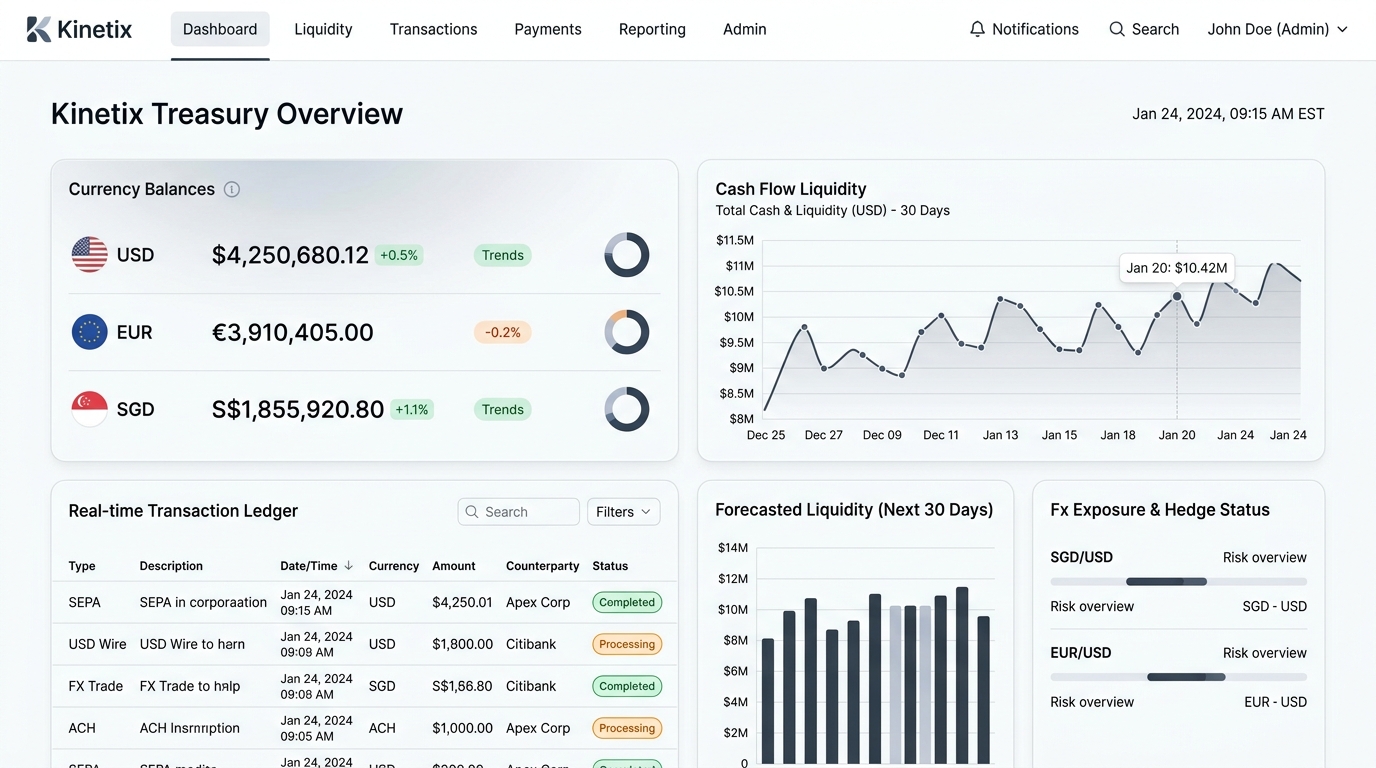
The redesigned Kinetix multi-currency treasury console with real-time predictive liquidity orchestration.
Executive Context
In modern international commerce, multinational enterprises lose tens of millions annually in foreign exchange slippage and manual ledger reconciliations. When Kinetix raised their Series B, their core engine was capable of processing complex multi-entity SWIFT and SEPA liquidity sweeps across 40+ currencies.
However, their legacy operator interface was a fragmented array of spreadsheet-like tables, unformatted timestamps, and disjointed banking API popups. Financial controllers were spending over 4.5 hours every morning manually verifying whether cash pools in Tokyo, London, and New York were sufficiently balanced before trading desks opened.
"Our backend engine was operating in milliseconds, but our human operators were moving at the speed of spreadsheet copy-paste. We needed an interface that treated liquidity as an active, living current rather than a static ledger." — Evelyn Vance, VP of Product at Kinetix
The Core Frictions
Through comprehensive contextual inquiries with 14 corporate treasury teams and hedge fund operators, we isolated three critical cognitive bottlenecks:
- The 'Currency Blind Spot': Foreign exchange balances were displayed without real-time volatility buffers, forcing treasurers to open third-party Bloomberg terminals simultaneously to check hedge ratios.
- Cascading Error Anxiety: When scheduling automated inter-company sweeps, operators had zero predictive simulation of whether an automated transfer would breach local entity minimum reserve requirements.
- Severe Visual Fatigue: Over 120 columns of unstyled numeric strings rendered in proportional fonts made row scanning an exhausting task susceptible to decimal placement errors.
The Architectural Solution: Unified Liquidity Console
We discarded the traditional multi-tab paradigm and engineered a Zero-Latency Treasury Console structured around operator mental models:
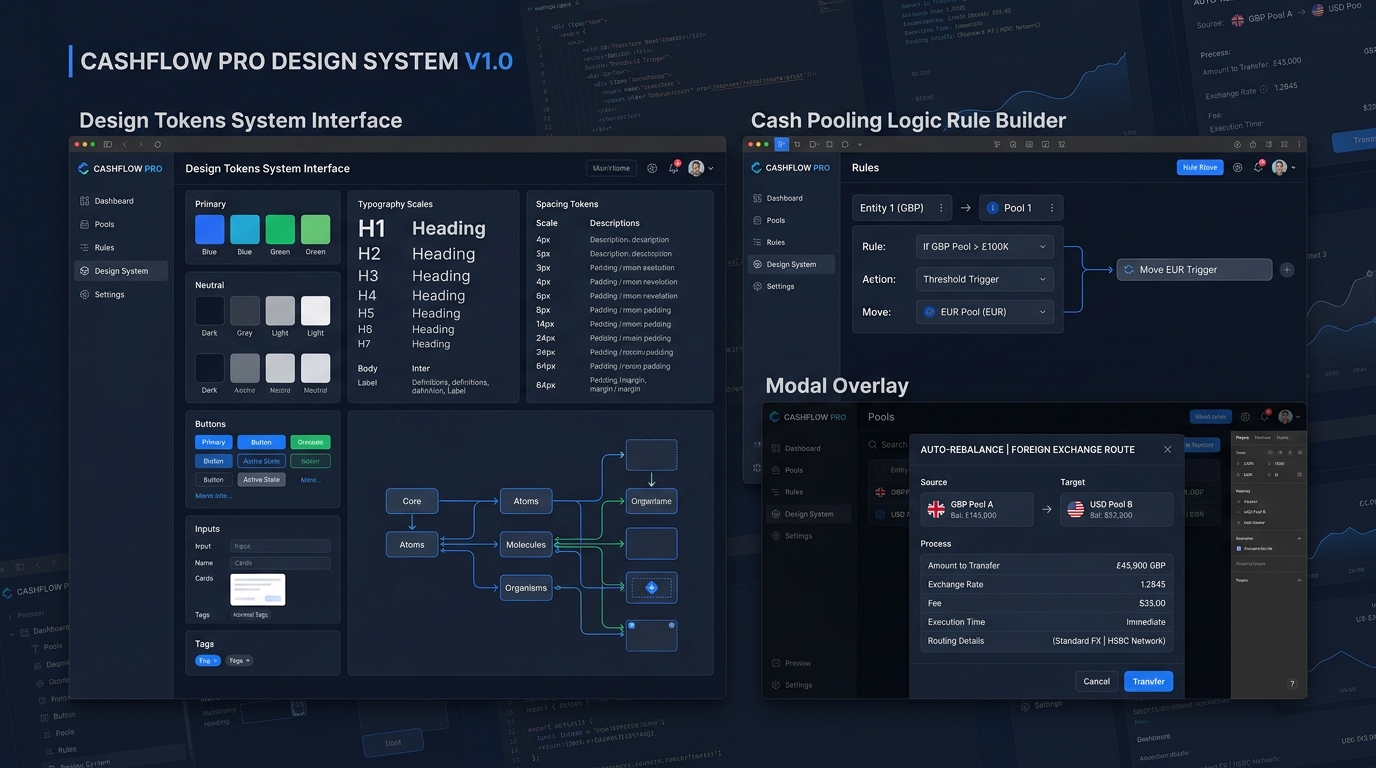
1. Dual-Stream Ledger & Predictive Rebalancer
We restructured the main ledger into a dual-stream view: settled transactions on the left and forecasted automated liquidity sweeps on the right. Operators can now simulate an automated rebalance rule before activating it across banking rails.
2. Design Tokens Synchronized with Figma Variables
Every spacing unit, numeric font variant, and semantic color state was codified into Figma Variables and automatically synced via GitHub Actions into production Tailwind tokens:
- Tabular Lining Numbers: Implemented
font-feature-settings: 'tnum'with monospaced digit spacing to prevent ocular jumps when live balance tickers update. - Risk Semantic Tones: Replaced harsh red alerts with graduated amber-to-crimson thresholds, reserving pure red exclusively for blocked compliance flags.
- Micro-Density Spacing: Built a 4px/8px spatial matrix that allows 2.5x more transaction rows per viewport without claustrophobic visual tension.
Measurable Business Impact
Following a phased 8-week rollout across pilot enterprise clients, the redesigned console fundamentally shifted operator performance:
- 74% Reduction in Reconciliation Time: Morning cash positioning was reduced from 4 hours 30 minutes to just 68 minutes.
- $14.8M Daily Automated Volume: Client trust in automated sweep rules surged, with automated liquidity movement growing by 310% in the first quarter post-launch.
- Zero Critical Transfer Breaches: Predictive threshold simulations prevented an estimated $6.2M in regulatory overdraft fines across client accounts.